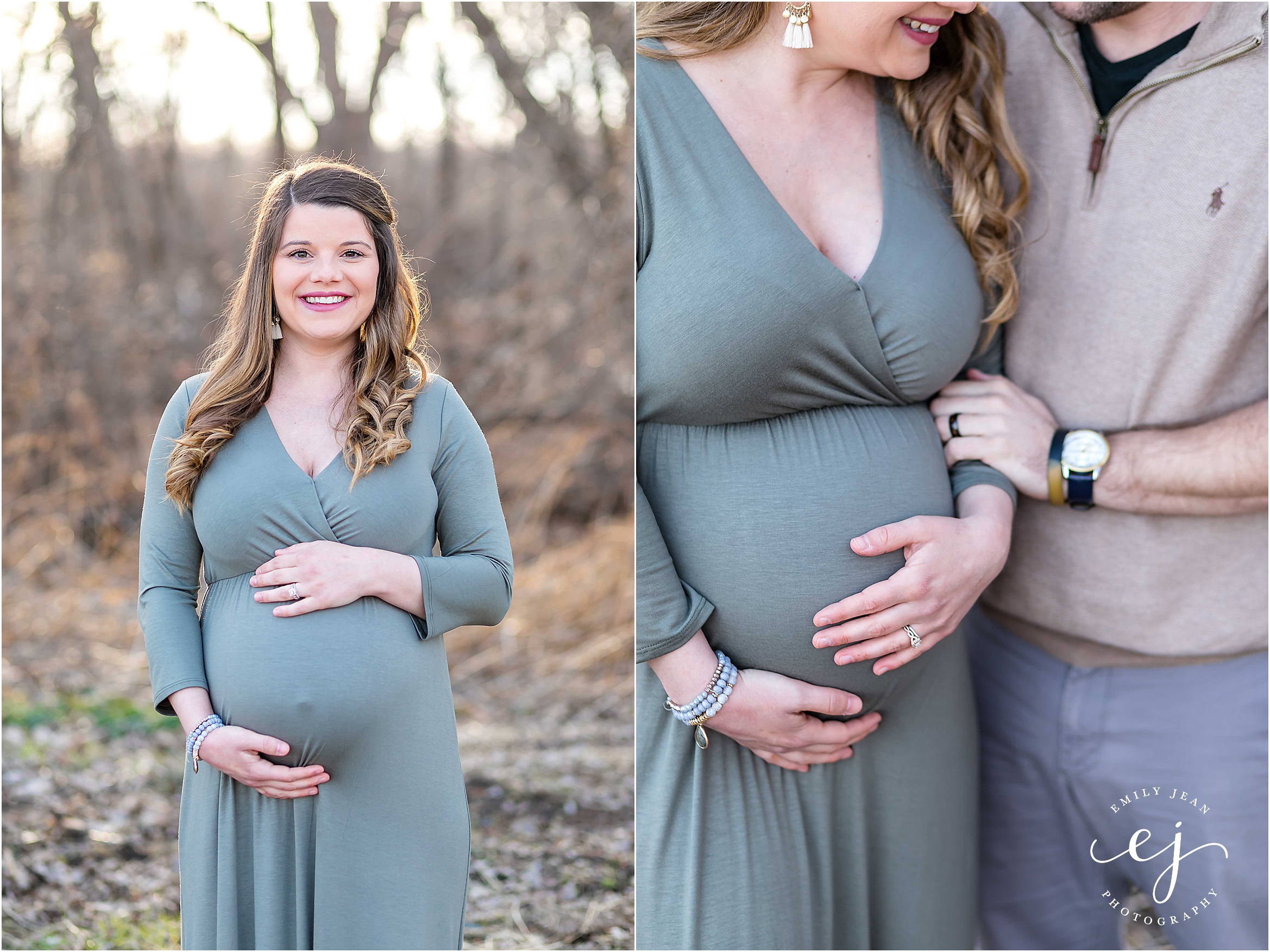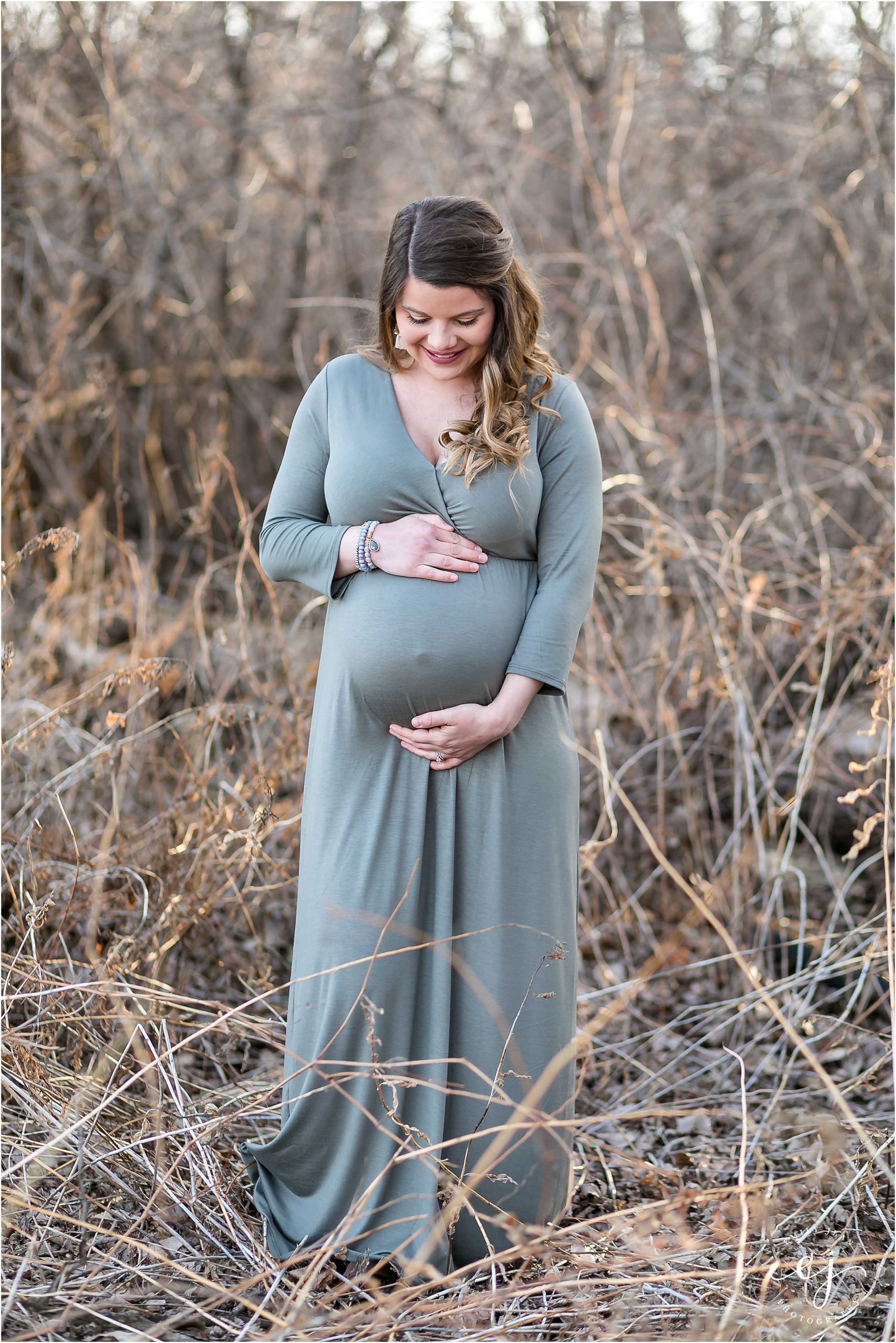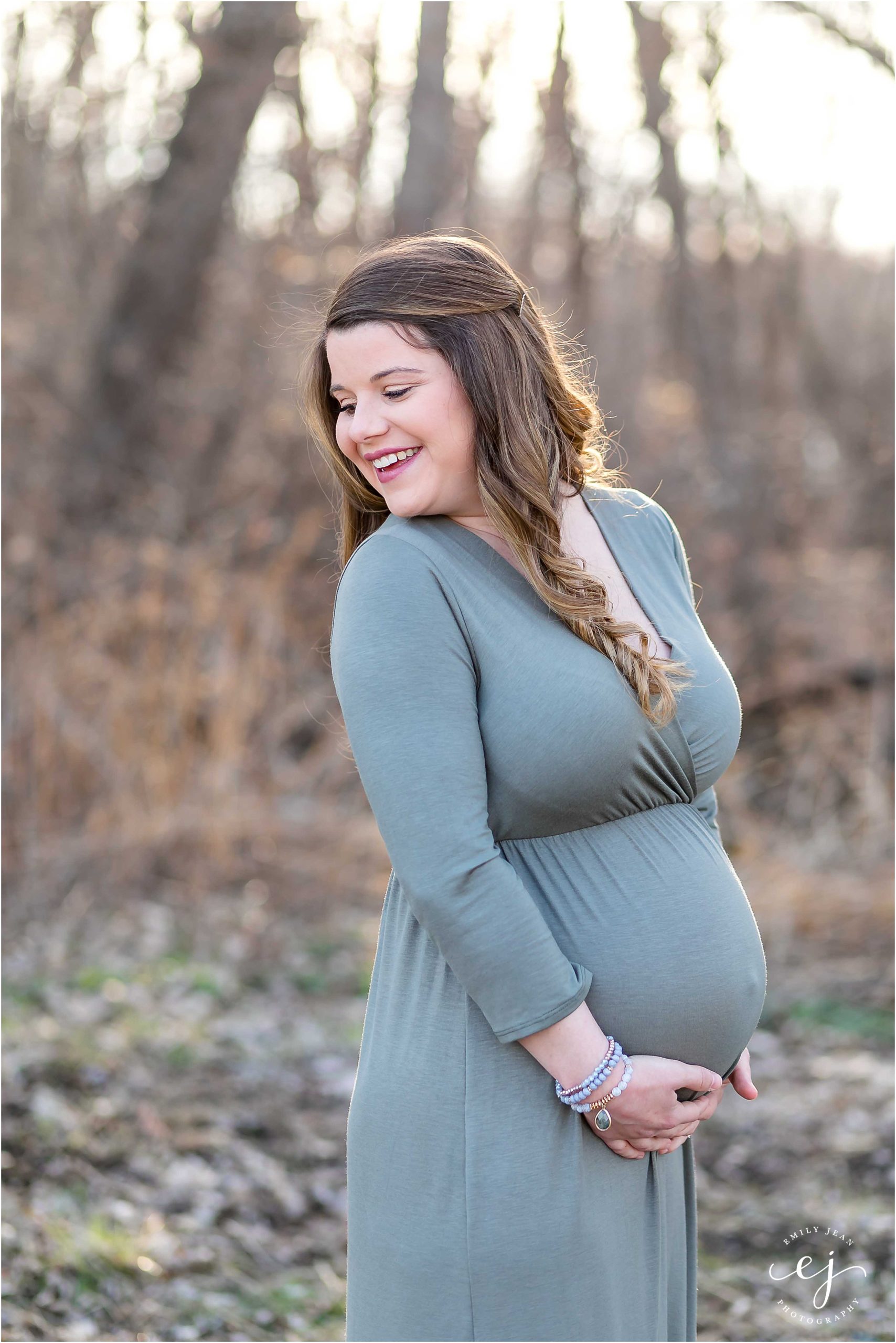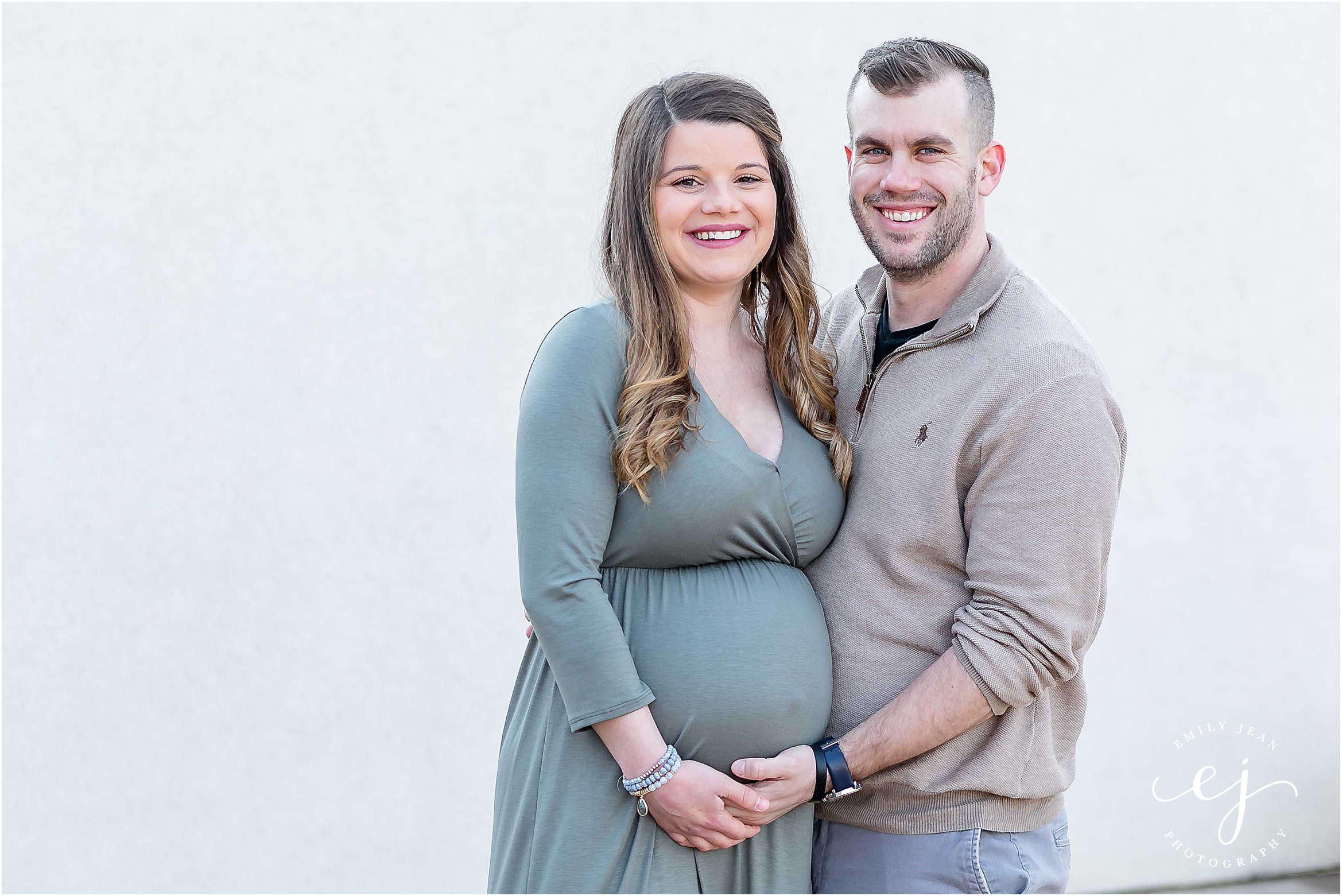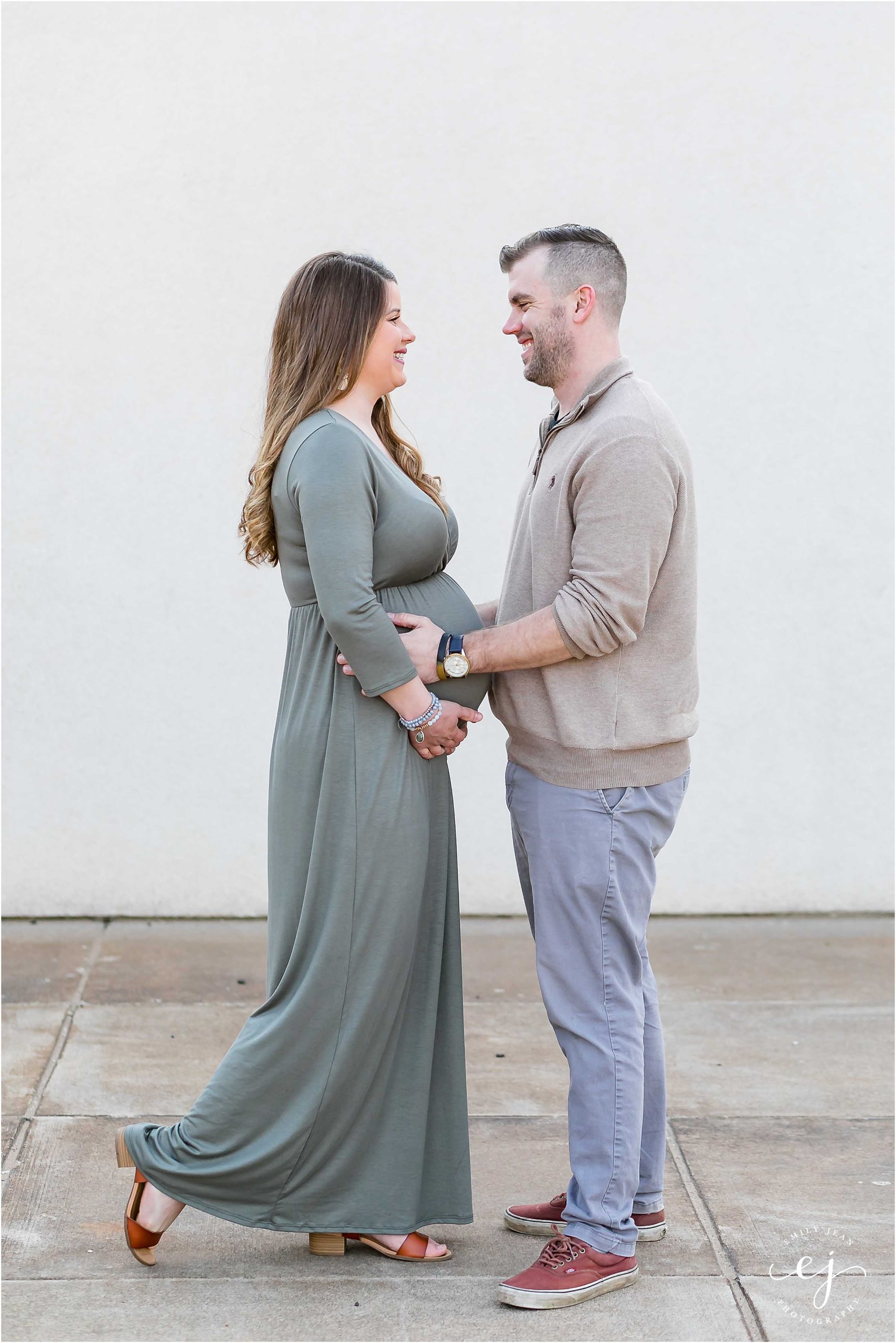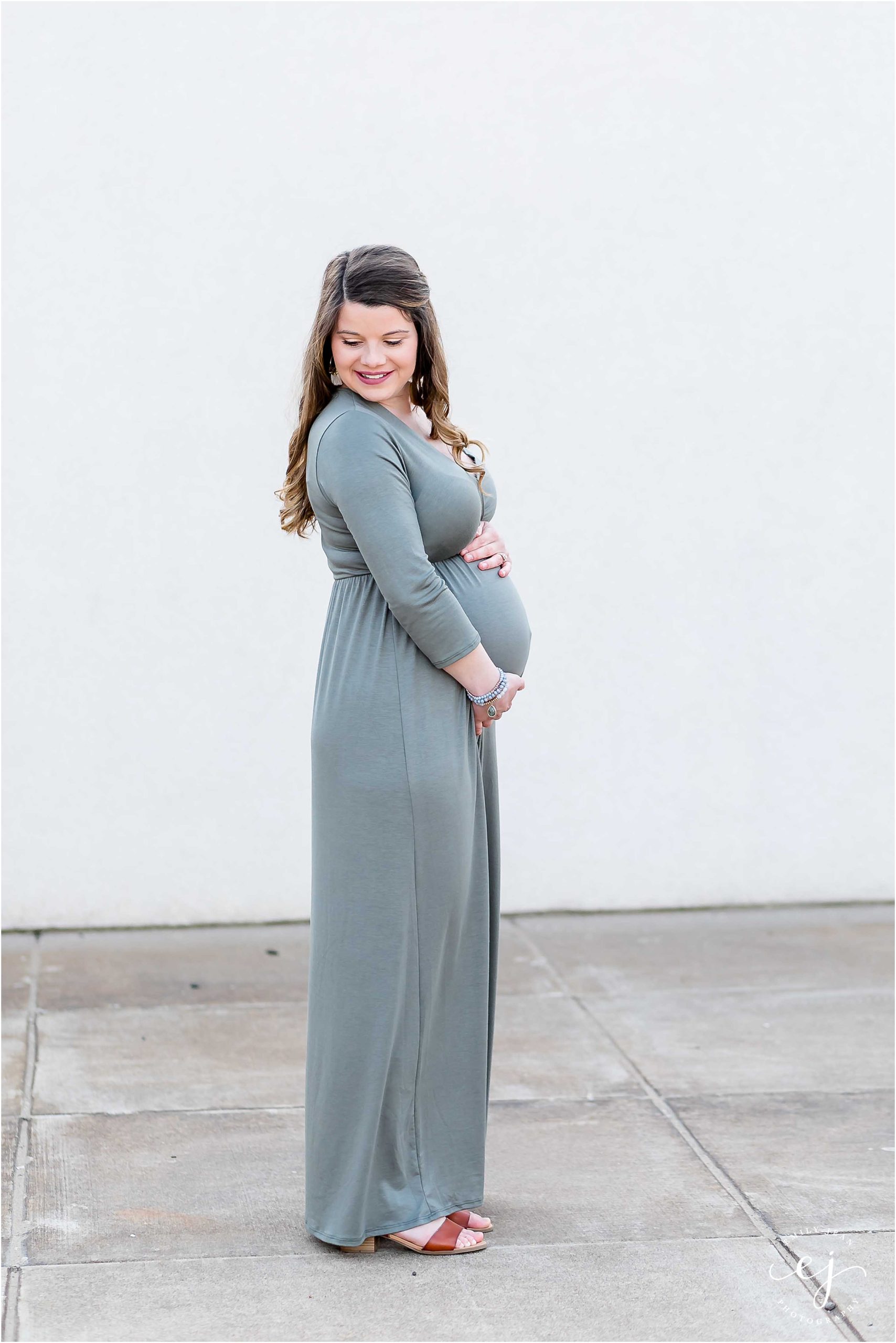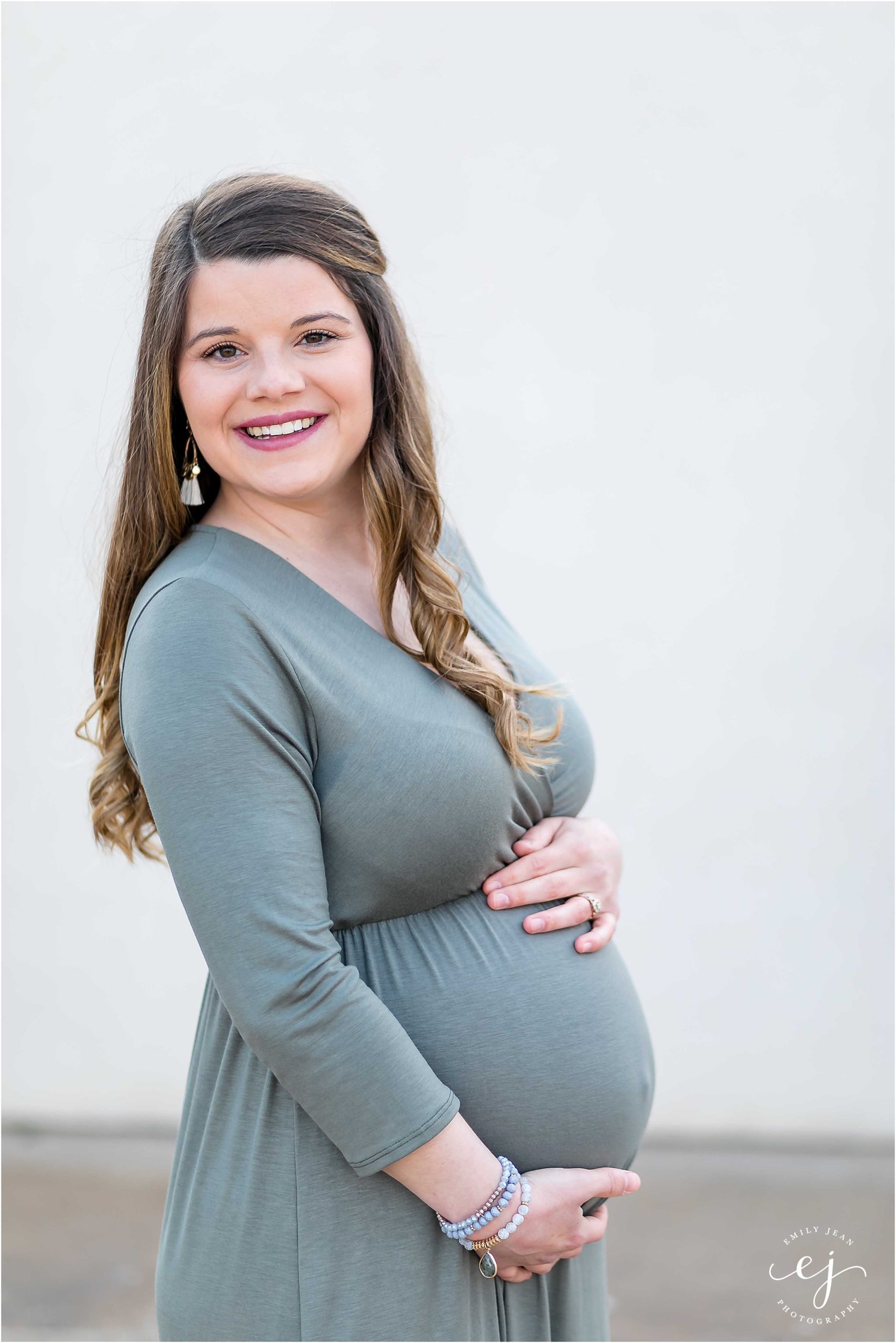
pregnant woman in light green knit dress pregnant with husband holding belly

NATURE MATERNITY SESSION IN LA CROSSE, WISCONSIN

THE LOCATION

Carly and Tyler’s spring maternity session in La Crosse, Wisconsin was so peaceful and beautiful. We met during the golden hour at Pettibone Park. I selected their location because I knew it would be private and relaxing. I wanted to create a fun experience to celebrate this special time in their lives! I selected an area surrounded by nature with tall grasses and trees. The sun was low in the sky and shone on the couple the whole session. SO PRETTY!

WHO THEY ARE

I met Carly years ago when we were in college together. When she contacted me recently asking for maternity photos, I was ecstatic! I remembered her being so charming and wonderful; I couldn’t wait to see her again.Β  Nothing has changed, Carly is still an absolute sweetheart. She’s caring, softhearted, and will be the perfect mom. Tyler brought lots of laughter and excitement to the shoot! He cannot wait for the new baby to come into the world. πŸ™‚ I captured so much love between the couple during their session!

WHAT THEY WORE

Carly wanted a long dress that showed off her gorgeous baby bump while still being comfortable. This live jersey knit dress was perfect! A statement bracelet and longer earrings added just the right amount of “pop” to her look. Tyler dressed in a neutral quarter-zip and slacks. I like what he selected because it kept all the attention on the baby bump. His basic apparel worked great!

FINAL THOUGHTS

Carly and Tyler, it was so wonderful seeing you and celebrating with you! I hope these images bring you even more joy and excitement for baby to come! It was such an honor to serve you during this special time. I cannot wait to see your new precious baby!!

Photography:Β Emily Jean Photography
How Bestbettingph Explains Football Betting Odds to Filipino Beginners

Understanding football betting odds is one of the most common stumbling blocks for new bettors in the Philippines. Unlike casino games where outcomes are largely random, sports betting requires interpreters to read numerical expressions that communicate probability, potential payout, and implied risk all at once. For many Filipinos entering the sports betting space for the first time, the numbers displayed on a sportsbook interface can appear cryptic and disconnected from the actual game being played. This disconnect between watching football and understanding the financial mechanics behind wagering on it has driven a growing demand for localized, plain-language educational content. Platforms that serve the Philippine market have increasingly recognized this gap, and resources dedicated to breaking down odds formats, stake calculations, and market types in a culturally relevant way have become genuinely useful tools for beginners trying to make informed decisions rather than guesses.

The Three Major Odds Formats and Why Filipino Bettors Encounter All of Them

Football betting odds are expressed in three primary formats globally: decimal odds, fractional odds, and American odds (also called moneyline odds). Each format communicates the same underlying information β€” the probability of an outcome and the return on a winning bet β€” but presents it in a different mathematical structure. Filipino bettors frequently encounter all three formats because the Philippine sports betting market draws from both European and American sportsbook operators, as well as regional platforms that have adopted their own display preferences.

Decimal odds are the most common format used by European and Australian sportsbooks, and they have become the default on many international platforms that accept Filipino players. A decimal odd of 2.50 on a team winning means that for every peso wagered, the bettor receives 2.50 pesos back if the bet wins β€” this total includes the original stake. The profit is therefore 1.50 pesos per peso bet. The calculation is straightforward: multiply the stake by the decimal figure, and the result is the total return. This simplicity makes decimal odds the easiest entry point for beginners, and most educational guides aimed at Filipino audiences recommend starting here before moving to other formats.

Fractional odds, which originated in the United Kingdom and Ireland and remain standard in British bookmakers, express profit relative to stake. Odds of 3/2 (read as “three to two”) mean that for every 2 pesos staked, the bettor wins 3 pesos in profit, plus the original 2 pesos returned, for a total of 5 pesos. The fraction itself represents the profit ratio, not the total return β€” a distinction that confuses many beginners who apply decimal logic to fractional displays. When fractional odds are greater than 1 (such as 5/2 or 7/1), the implied probability of that outcome is below 50%, signaling an underdog. When they are less than 1 (such as 1/2 or 2/5), the implied probability is above 50%, indicating a heavy favorite.

American odds use a plus/minus system anchored to a 100-unit baseline. A negative number, such as -150, indicates how much must be wagered to win 100 units of profit. A positive number, such as +130, indicates how much profit a 100-unit stake would generate. For Filipino bettors accustomed to thinking in Philippine pesos rather than abstract units, this format initially requires a mental recalibration. The key insight is that the sign itself carries meaning: negative odds always indicate the favorite, and positive odds always indicate the underdog, regardless of the specific numbers involved.

Converting between these formats is a skill that experienced bettors develop early. The underlying implied probability can be extracted from any format using straightforward formulas. For decimal odds, the implied probability equals 1 divided by the decimal figure, expressed as a percentage. For fractional odds, it equals the denominator divided by the sum of numerator and denominator. For American odds, negative figures use the formula: absolute value divided by (absolute value plus 100), while positive figures use 100 divided by (the figure plus 100). Understanding these conversions allows bettors to compare odds across different platforms and identify which sportsbook offers the most favorable terms for a given match.

How Bestbettingph Structures Its Odds Education for Local Audiences

Educational content about betting odds often fails beginners because it is written at a level of abstraction that assumes prior familiarity with financial concepts or sports analytics. Bestbettingph has approached this challenge by grounding its explanations in football contexts that Filipino audiences already understand β€” matches from the Philippine Football Federation league, AFC Cup qualifiers involving Philippine clubs, and the globally followed UEFA Champions League and FIFA World Cup tournaments that attract heavy betting activity in the country.

Rather than presenting odds as abstract mathematical constructs, the platform’s educational materials walk through live match examples. A tutorial might use a specific match between two teams with a clear favorite and underdog dynamic, showing exactly how the odds displayed on a Philippine-facing sportsbook translate into potential payouts for a defined stake amount. This grounded approach removes the conceptual distance between reading a number on a screen and understanding what it means for a 500-peso or 1,000-peso wager. The use of peso-denominated examples is deliberate β€” it makes the stakes tangible and avoids the confusion that arises when tutorials use generic “units” that require an additional conversion step.

One area where this kind of localized education proves particularly valuable is in explaining the concept of the bookmaker’s margin, also called the overround or vig. Every set of odds offered by a sportsbook contains a built-in profit margin for the operator. In a two-outcome market such as a tennis match or a penalty shootout, the implied probabilities of both outcomes, when added together, will always exceed 100% β€” the excess represents the bookmaker’s edge. In football, where three outcomes are possible (home win, draw, away win), this overround is distributed across three sets of odds, making it less immediately obvious to a casual observer. A match where each outcome appears roughly equally likely might display odds of 2.40, 3.20, and 2.80 for home win, draw, and away win respectively. Converting each to implied probability gives approximately 41.7%, 31.3%, and 35.7%, which sum to 108.7% β€” the 8.7% excess is the bookmaker’s margin. Understanding this concept is foundational because it explains why simply picking winners is not sufficient for long-term profitability; the odds must also represent genuine value relative to the bettor’s own probability assessment.

When reviewing educational resources across several Philippine-facing platforms, our experts found that the most effective guides combined odds format explanations with practical market-specific examples, rather than treating odds literacy as a standalone topic disconnected from actual betting decisions. This integrated approach β€” connecting the mechanics of odds reading to specific bet types such as Asian handicap, over/under totals, and correct score markets β€” significantly accelerated comprehension among readers who were new to sports wagering.

The Asian handicap market deserves particular attention in any education aimed at Filipino bettors, because it is among the most popular football bet types in Southeast Asia and yet among the most misunderstood by beginners. Unlike a standard three-way match result market, Asian handicap betting eliminates the draw as a possible outcome by assigning a virtual advantage or disadvantage to each team. A -0.5 handicap on the favorite means that team must win by at least one goal for the bet to succeed; a +0.5 handicap on the underdog means the bet wins if the underdog wins or draws. Quarter-ball handicaps (such as -0.25 or +0.75) split the stake across two adjacent handicap lines, meaning partial wins and partial losses are possible outcomes. This nuance is lost entirely in a generic odds tutorial but becomes immediately comprehensible when illustrated with a specific match scenario and a defined stake amount.

Regulatory Context and Responsible Betting Frameworks in the Philippines

Football betting in the Philippines operates within a regulatory framework administered primarily by the Philippine Amusement and Gaming Corporation (PAGCOR), which was established under Presidential Decree 1869 and has undergone significant structural updates since its reorganization in the 1990s. PAGCOR licenses both land-based and online gaming operators, and its authority extends to sports betting platforms that serve the domestic market. In 2016, PAGCOR introduced the Philippine Offshore Gaming Operator (POGO) framework to regulate online gaming operations, though subsequent years saw significant policy debates about the scope and taxation of these licenses, with the Senate voting in 2024 to ban POGO operations entirely amid concerns about criminal activity associated with some operators.

For Filipino bettors engaging with football markets, the regulatory environment means that legitimate platforms should hold verifiable PAGCOR licenses or operate under equivalent offshore licenses recognized by the Philippine government. Educational content that explains odds should also situate this knowledge within responsible gambling principles β€” understanding how odds work is not merely an academic exercise but a practical tool for managing risk. A bettor who understands that odds of 5.00 imply a 20% probability of success is in a fundamentally better position to assess whether a 1,000-peso wager represents a calculated risk or an emotional impulse.

The Philippine Statistics Authority’s 2022 survey on gambling behavior indicated that approximately 58% of Filipino adults had participated in some form of gambling activity in the preceding 12 months, with sports betting showing year-on-year growth driven by mobile internet penetration. The country’s mobile internet usage rate exceeded 73% of the population by 2023, according to data from Statista, which has directly enabled the expansion of mobile-first sports betting platforms. This demographic context matters for understanding why odds education delivered through short-form video, annotated screenshots, and mobile-optimized text has proven more effective than long-form written guides formatted for desktop reading.

Responsible gambling frameworks in the Philippines require licensed operators to display problem gambling helpline information and offer self-exclusion tools. For beginners learning odds for the first time, responsible gambling education is most effective when integrated into odds literacy content rather than presented as a separate, disconnected disclaimer. When a beginner understands that a 10% bookmaker margin means they are starting every bet at a structural disadvantage, the concept of bankroll management β€” limiting wagers to a fixed percentage of total funds β€” becomes intuitively logical rather than an arbitrary rule imposed by a platform. This integration of financial literacy with odds education is what distinguishes genuinely useful beginner resources from promotional content dressed up as education.

Practical Steps for Applying Odds Knowledge to Real Football Markets

Reading odds is only the first layer of football betting literacy. The next layer involves applying that reading to actual market selection and stake sizing in a way that reflects a coherent approach to risk. For Filipino beginners, this means developing the habit of converting any displayed odds into their implied probability before placing a wager, then asking whether personal analysis of the match suggests the true probability is higher or lower than what the bookmaker implies.

This process β€” comparing implied probability against personal probability assessment β€” is the foundation of value betting, a concept that separates recreational bettors from those who approach the activity with analytical discipline. If a bettor believes a team has a 55% chance of winning a match, but the bookmaker’s odds imply only a 45% probability, the odds represent positive expected value from the bettor’s perspective. Whether that assessment is correct will only be known over a large sample of bets, which is why value betting requires both analytical skill and the emotional discipline to accept short-term losses without abandoning a long-term strategy.

Football-specific knowledge enhances this process considerably. Understanding that home advantage in the Philippine Football Federation league differs from home advantage in the English Premier League, that certain teams perform differently in wet conditions or at altitude, and that squad rotation during congested fixture schedules affects team strength β€” all of this contextual knowledge feeds into a more accurate personal probability assessment. Odds education without this contextual layer produces bettors who can calculate payouts accurately but still make systematically poor selections.

Line movement β€” the change in odds between when a market opens and when the match kicks off β€” provides another layer of information for bettors who know how to read it. When a market opens with a team at 2.10 and that figure moves to 1.85 by match day, it typically indicates significant betting volume on that team, which may reflect sharp money from professional bettors or simply high public sentiment. For beginners, tracking line movement is an advanced skill, but understanding that odds are not static and that their movement carries informational content is an important conceptual step beyond simply reading the number at the moment of betting.

Bestbettingph’s educational approach addresses this progression explicitly β€” beginning with format comprehension, moving through implied probability calculation, then introducing market-specific considerations and finally the concept of line movement and its interpretation. This sequenced structure mirrors how experienced bettors actually develop their knowledge over time, rather than presenting all concepts simultaneously in a way that overwhelms beginners without giving them a functional entry point.

Stake sizing is the final practical element that odds education must address. Even a bettor with accurate probability assessments and a genuine edge over the bookmaker can lose their entire bankroll through poor stake management. The Kelly Criterion, developed by mathematician John Kelly in 1956, provides a mathematically optimal formula for determining what fraction of a bankroll to wager based on the perceived edge and the odds on offer. While the full Kelly formula is mathematically aggressive and most practitioners use a fractional version (typically one-quarter or one-half Kelly), understanding the underlying principle β€” that stake size should scale with perceived edge and odds value β€” gives beginners a rational framework for decisions that are otherwise driven by intuition or emotion.

For Filipino beginners navigating football betting for the first time, the combination of odds literacy, implied probability conversion, market-specific knowledge, and basic bankroll management represents a complete foundational education. Each element builds on the previous one, and none is fully useful in isolation. The value of resources that present this knowledge in a locally relevant, practically grounded way is precisely that they compress what might otherwise take months of trial-and-error learning into a structured educational sequence that beginners can work through before placing their first significant wager.

Football betting in the Philippines is not going to become simpler as the market matures β€” more markets, more operators, and more sophisticated pricing models will continue to enter the space. Beginners who invest time in understanding odds at a foundational level before focusing on match prediction are building a durable skill set rather than a fragile strategy dependent on short-term luck. The difference between a bettor who reads odds and one who understands them is, over time, the difference between a hobby that occasionally pays and one that is approached with the analytical seriousness it requires to be sustainable.

husband and wife facing each other and holding hands in spring nature husband and wife walking in springtime at pettibone park pregnantpregnant woman in light green knit dress pregnant with husband holding belly spring maternity session mama baby bump pregnant mom looking down at her baby bump husband and wife smiling at the camera and hands on baby bumppregnant mother standing in nature spring maternity holding belly husband and wife's hands holding baby bump pregnant woman looking behind herself smiling and holding belly pregnang woman and husband standing in pettibone park spring maternity session in pettibone park la crosse wisconsin pregnant woman in green dress professional maternity session husband and wife wearing neutral colors maternity photo pregnant woman in light green knit dress pregnant with husband holding bellypregnant woman looking behind herself smiling and holding belly husband and wife facing each other and holding hands in spring nature

Leave a Reply

Your email address will not be published. Required fields are marked *